


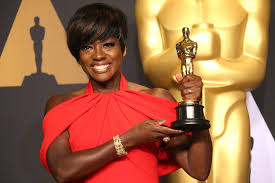

Viola Davis is one of the most acclaimed actors of her generation and a historic figure in the performing arts: she is both an EGOT winner (Emmy, Grammy, Oscar, Tony) and a member of the “Triple Crown of Acting,” having won competitive awards in all three major acting mediums.(Wikipedia) Born in St. Matthews, South Carolina, and raised largely in Central Falls, Rhode Island, she grew up in poverty and has spoken candidly about living in “rat-infested” housing and experiencing hunger—experiences that have shaped her empathy and advocacy.(Wikipedia)
Davis discovered acting through school programs and went on to study theater at Rhode Island College before graduating from the prestigious Juilliard School. She built her career first on stage, earning acclaim in New York theatre and winning Tony Awards for performances in King Hedley II and the 2010 revival of August Wilson’s Fences.
Her screen career developed steadily, with scene-stealing turns in films like Doubt, where a brief but powerful role opposite Meryl Streep earned her an Academy Award nomination despite minimal screen time. She later won the Oscar for Best Supporting Actress for the film adaptation of Fences, reprising the role of Rose Maxson and delivering one of the most lauded performances of the decade.
On television, Davis broke ground as Annalise Keating in Shonda Rhimes’ How to Get Away with Murder, becoming the first Black woman to win the Emmy for Outstanding Lead Actress in a Drama Series. Her work on the show showcased her range—from fierce courtroom bravado to raw vulnerability—and expanded mainstream representation of complex Black female protagonists.
Davis has also shone in films such as The Help, Widows, Ma Rainey’s Black Bottom, and The Woman King, frequently portraying women whose strength coexists with deep emotional scars. She co-founded JuVee Productions with her husband, Julius Tennon, dedicated to telling inclusive, character-driven stories across film and television.(Wikipedia)
In recent years she has voiced major animated characters and continued appearing in franchise roles like Amanda Waller in DC adaptations, while also publishing a memoir, Finding Me, about her journey from poverty to global recognition. Davis is widely admired not just for her artistry, but for her forthright discussions of racism, colorism, trauma, and opportunity in Hollywood, making her a moral as well as artistic force.